
-
Who We Are
Who We Are

Over 100 industry awards, accolades, and achievements showcase our quality and commitment to client success.

-
Our Services
Our Services
Technologies

-
Case Study
Case Study
Trusted by 500+ active clients.

- Contact Us

Local SEO Checklist for UK Small Businesses
For a small business in the UK, appearing when local customers search for your products or services can make a significant difference. Whether you run a trades business in Essex, a shop in Manchester or a professional service in London, local SEO helps you become more visible to people who are most likely to become customers.
Google says local search results are primarily influenced by relevance, distance and prominence. This means businesses need more than a website to compete locally. Your Google Business Profile, reviews, website content, business information and online reputation all contribute to how customers discover you.
Content Overview
- What Is Local SEO?
- Local SEO Checklist for UK Small Businesses
- Common Local SEO Mistakes to Avoid
- How Long Does Local SEO Take?
- Professional SEO Services for Businesses in Essex
What Is Local SEO?
Local SEO is the process of improving your online presence so your business can appear more prominently in searches related to a specific location. It can help you reach customers searching for services such as "plumber in Essex", "accountant near me" or "Indian restaurant in Birmingham".
Unlike traditional SEO, local SEO focuses heavily on geographical relevance. Google uses information about your business and the searcher's location to determine which local results are most useful. Therefore, accurate location information and a strong local presence are essential.
Local SEO Checklist for UK Small Businesses
Use the following checklist to review your current local SEO strategy and identify areas that need improvement.
1. Claim and Verify Your Google Business Profile
Your Google Business Profile is one of the most important assets for local search. It allows your business to appear on Google Search and Maps while giving potential customers useful information about your company. Google recommends that eligible businesses claim and verify their profiles.
Make sure your profile accurately represents your business and contains complete information. An incomplete profile can make it harder for Google and potential customers to understand what you offer.
- 1. Claim your Google Business Profile
- 2. Complete the verification process
- 3. Use your real business name
- 4. Add your correct address or service area
- 5. Add your business telephone number
- 6. Include your website
- 7. Select the most relevant primary category
- 8. Add suitable secondary categories where appropriate
2. Keep Your Business Information Consistent
Your business name, address and telephone number should remain consistent across your website and relevant online directories. Inconsistent information can create confusion for customers and search engines.
Check important business details regularly, particularly after changing premises, telephone numbers or opening hours. Keeping your Business Profile information accurate and up to date can also provide a better experience for potential customers.
3. Choose the Right Google Business Category
Your primary category helps Google understand what your business does. Choose the category that most accurately describes your main service rather than selecting a category simply because it contains a desirable keyword.
You can also add relevant additional categories if they genuinely describe your services. Avoid adding unrelated categories, as your profile should accurately represent the business.
4. Add Accurate Opening Hours
Customers often use Google to check whether a business is currently open. Incorrect opening hours can create a poor customer experience and may result in missed enquiries or visits.
Keep your regular opening hours updated and remember to add special hours for bank holidays or temporary changes. Accurate information makes it easier for customers to know when they can contact or visit your business.
5. Build Genuine Customer Reviews
Reviews can influence both customer confidence and local visibility. Encourage genuine customers to leave honest feedback after using your products or services.
Avoid purchasing reviews or asking people to create misleading feedback. Instead, make requesting reviews a natural part of your customer service process. Responding professionally to reviews can also show potential customers that you value their feedback.
- 1. Ask genuine customers for reviews
- 2. Make the review process simple
- 3. Respond to positive reviews
- 4. Respond professionally to negative feedback
- 5. Never buy fake reviews
6. Add High-Quality Photos and Videos
Visual content can make your Business Profile more appealing and give potential customers a better understanding of your business. Depending on your industry, consider adding photographs of your premises, team, products, completed projects or services.
Keep images authentic and relevant. For example, a local builder could showcase completed projects, while a restaurant could display its premises, dishes and dining environment.
7. Optimise Your Website for Local Searches
Your website should clearly communicate what you do and where you operate. Create useful service pages that naturally mention relevant locations rather than repeatedly inserting the same keyword.
For example, a business serving Essex could create dedicated pages for its core services and relevant areas where it genuinely operates. The content should provide useful information rather than simply repeating location names.
8. Create Dedicated Location Pages Where Appropriate
If your business serves multiple locations, location pages can help explain your services in each area. However, every page should provide genuinely useful, location-specific information.
Avoid creating dozens of almost identical pages with only the town name changed. Instead, make each page valuable by discussing local services, customer needs, service areas and relevant information.
9. Optimise Your Website's Title Tags and Meta Descriptions
Your page titles and meta descriptions should clearly explain what each page offers. Where appropriate, include the service and location naturally.
For example:
SEO Services in Essex | ClimbIT Limited
This approach gives search engines and potential customers a clear indication of the page's purpose without unnecessary keyword repetition.
10. Improve Your Website's Mobile Experience
Many local searches happen on smartphones, particularly when people are looking for businesses nearby. Your website should therefore work smoothly across mobile devices.
Check that text is easy to read, buttons are simple to tap and important information such as telephone numbers and contact forms is easy to find. A fast, user-friendly website can also provide a better experience for visitors.
11. Build Relevant Local Citations
Local citations are online mentions of your business, often including details such as your name, address and telephone number. Relevant directories and industry websites can help strengthen your local presence.
Focus on reputable, relevant platforms rather than submitting your business to every directory available. Quality and relevance are more valuable than creating large numbers of low-quality listings.
12. Earn Relevant Local Backlinks
Backlinks from reputable websites can help strengthen your website's authority. For a local business, relevant links can come from local organisations, industry associations, community websites, local publications and legitimate business partnerships.
Think about opportunities that naturally connect your business with your local community. Sponsoring a relevant local event, contributing expert knowledge or collaborating with another business can sometimes create useful exposure and legitimate links.
13. Publish Useful Local Content
Content marketing can support your local SEO strategy by answering questions your target customers are searching for. Focus on topics that demonstrate your expertise and solve genuine problems.
For example, a roofing company could publish guides about maintaining roofs during the UK's winter weather. A local accountant could create content explaining common tax considerations for small businesses.
14. Add Relevant Internal Links
Internal links help visitors navigate your website and allow search engines to discover related pages. Link relevant blog posts to your service pages and connect location pages with the services available in those areas.
Use descriptive anchor text that makes sense to readers. Avoid adding internal links simply to include keywords.
15. Check Your Website's Technical SEO
Technical problems can affect how search engines crawl, understand and index your website. Regularly check for issues that could prevent important pages from performing properly.
Your technical checklist should include:
- 1. Check for broken links
- 2. Make sure important pages are indexable
- 3. Review page loading performance
- 4. Ensure your website works on mobile devices
- 5. Use HTTPS
- 6. Check your XML sitemap
- 7. Review your robots.txt file
- 8. Fix major crawl errors
16. Use Local Business Schema Markup
Structured data can help search engines understand information about your business. Depending on your business and website, relevant structured data may include details such as your organisation, location, services and contact information.
Schema markup should accurately represent information visible on your website. It should not be used to add misleading information purely for search engine purposes.
17. Monitor Your Local SEO Performance
Local SEO should be measured rather than treated as a one-off task. Track how your website and Business Profile perform over time to understand which activities are producing useful results.
Consider monitoring:
- 1. Organic search traffic
- 2. Local keyword rankings
- 3. Google Business Profile interactions
- 4. Website enquiries
- 5. Phone calls
- 6. Direction requests
- 7. Review growth
- 8. Leads and conversions
Looking at these metrics helps you focus your resources on activities that support genuine business growth.
Common Local SEO Mistakes to Avoid
Small businesses often make local SEO more complicated than necessary. Some focus entirely on keywords while overlooking basic information, reviews and customer experience.
Common mistakes include:
- 1. Creating fake business locations
- 2. Using inaccurate business information
- 3. Buying reviews
- 4. Keyword stuffing location pages
- 5. Creating duplicate location content
- 6. Ignoring negative reviews
- 7. Choosing irrelevant Business Profile categories
- 8. Building low-quality backlinks
- 9. Forgetting to update opening hours
- 10. Treating local SEO as a one-off task
Google's guidelines state that businesses should accurately represent themselves, use precise address or service-area information and avoid creating multiple profiles for the same business.
How Long Does Local SEO Take?
There is no universal timeframe for local SEO. A new business with little online presence may need more time to establish authority than an established company with strong reviews, relevant backlinks and an optimised website.
Local SEO is best viewed as an ongoing investment. Consistent improvements to your Business Profile, website, content, reviews and local authority can gradually strengthen your visibility.
Professional SEO Services for Businesses in Essex
Managing local SEO alongside your daily business operations can be challenging. If you want professional support, ClimbIT Limited provides SEO services in Essex, UK, helping businesses improve their search visibility and attract more relevant organic traffic.
From technical SEO and keyword research to content optimisation and local search strategies, ClimbIT Limited can help develop an SEO approach based on your business goals and target market.
You can learn more about their SEO services in Essex.
Grow Your Business with ClimbIT Limited
If you want to improve your search rankings and generate more qualified leads, ClimbIT Ltd can help. The team provides professional SEO services for businesses across Essex and London, helping both ecommerce brands and local service companies achieve sustainable organic growth.
Whether you need any kind of SEO services in Essex like technical SEO, local SEO, content optimisation, or a complete SEO strategy, visit us to discover how ClimbIT Ltd can help your business grow online.
enquire now
Local SEO Checklist for UK Small Businesses
Read More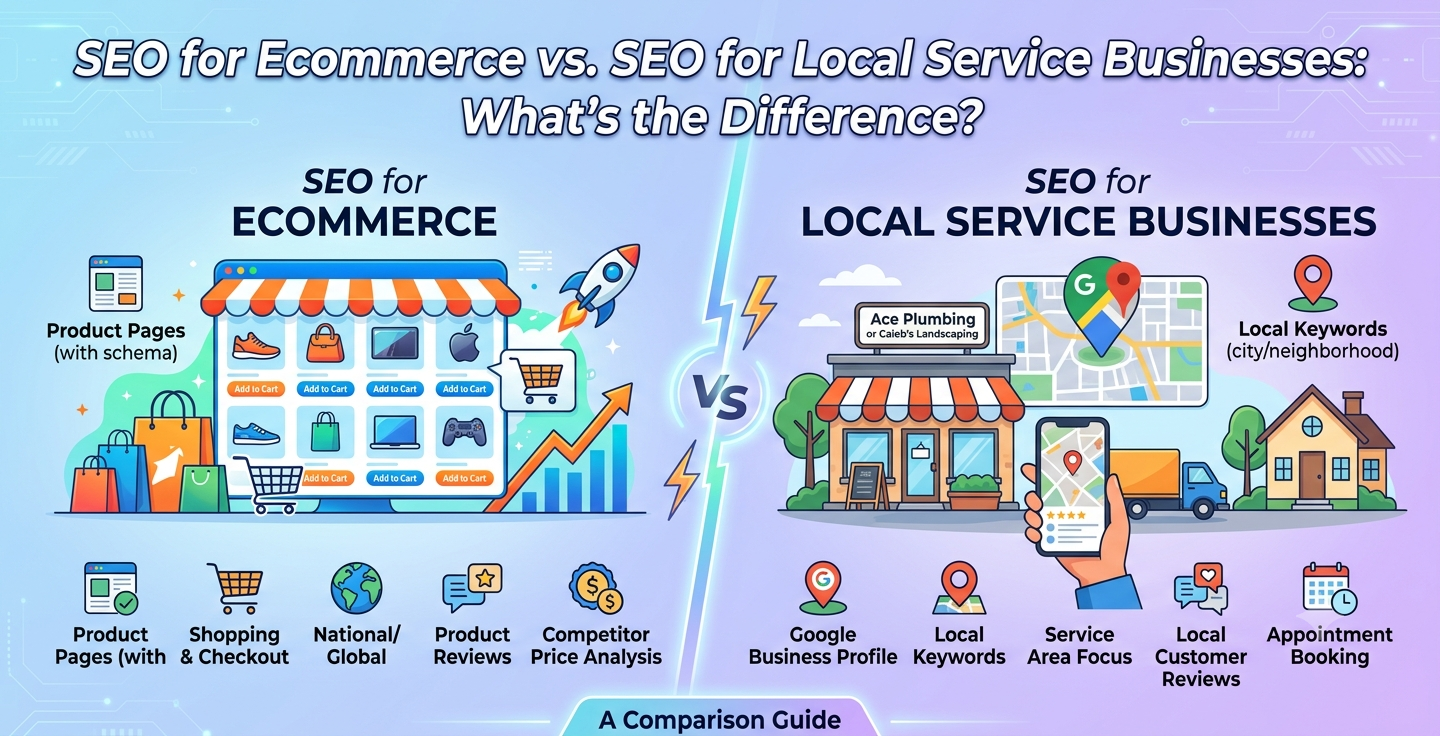
SEO for Ecommerce vs. SEO for Local Service Businesses: What’s the Difference?
SEO is not a one-size-fits-all strategy. An ecommerce website and a local service business have different goals, customers, and search behaviours.
Read More
How Long Does It Take to Rank in Google?
An intuitive, user-friendly design plays a key role in converting website visitors into loyal customers. By focusing on UX/UI best practices like simplified navigation…
Read More

We will call you back.