
-
Who We Are
Who We Are

Over 100 industry awards, accolades, and achievements showcase our quality and commitment to client success.

-
Our Services
Our Services
Technologies

-
Case Study
Case Study
Trusted by 500+ active clients.

- Contact Us


SEO for Ecommerce vs. SEO for Local Service Businesses: What’s the Difference?
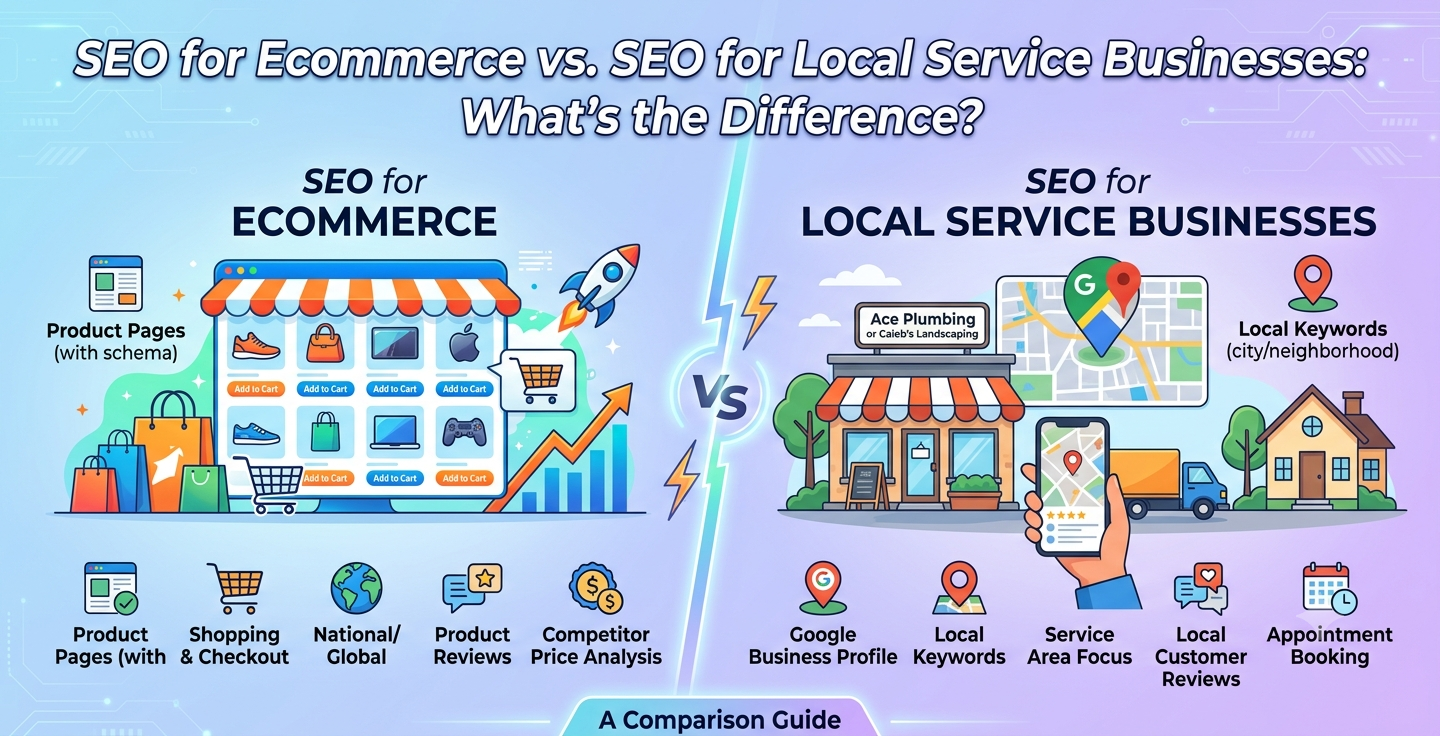
SEO is not a one-size-fits-all strategy. An ecommerce website and a local service business have different goals, customers, and search behaviours. While both rely on search engines to attract traffic, the tactics that deliver results vary significantly. Understanding these differences helps businesses invest in the right SEO strategy and achieve sustainable growth.
Google uses hundreds of ranking signals to decide which websites deserve the top positions. While some pages may see improvements within a few weeks, competitive keywords often take several months to achieve strong rankings. Understanding the process helps you set realistic expectations and build a sustainable SEO strategy.
Content Overview
- What Is Ecommerce SEO?
- What Is SEO for Local Service Businesses?
- Ecommerce SEO vs. Local SEO: The Main Differences
- Which Business Needs Which SEO Strategy?
- SEO Foundations Both Strategies Share
What Is Ecommerce SEO?
Ecommerce SEO focuses on increasing the visibility of online stores that sell products across the UK or internationally. The primary objective is to rank product pages, category pages, and buying guides for keywords with strong purchase intent.
A successful ecommerce SEO strategy attracts qualified visitors and converts them into customers through an excellent shopping experience. Large online stores also benefit from well-organised site architecture, technical optimisation, and effective internal linking.
Key Elements of Ecommerce SEO
- 1. Product and category page optimisation
- 2. Commercial keyword research
- 3. Technical SEO for large websites
- 4. Internal linking between collections and products
- 5. Product schema and review schema
- 6. Fast-loading pages and image optimisation
- 7. Buying guides and informative blog content
What Is SEO for Local Service Businesses?
Local SEO helps businesses attract customers within a specific geographical area. Instead of targeting shoppers nationwide, local companies focus on appearing when nearby customers search for their services.
Businesses such as dentists, plumbers, electricians, accountants, and digital marketing agencies depend heavily on local SEO. Google Business Profile optimisation, customer reviews, local citations, and location-specific content all play an important role.
Key Elements of Local SEO
- 1. Google Business Profile optimisation
- 2. Location-based keyword targeting
- 3. Dedicated service area pages
- 4. Customer review management
- 5. Local business citations
- 6. Consistent Name, Address and Phone Number (NAP)
- 7. Locally relevant backlink building
Ecommerce SEO vs. Local SEO: The Main Differences
1. Target Audience
Ecommerce businesses target customers across wider markets, while local service companies focus on people within a defined service area. Their keyword strategies and marketing priorities reflect these different audiences.
- 1. Ecommerce: Buy men's trainers online
- 2.
Local Business: SEO agency in Essex
2. Keyword Strategy
Ecommerce SEO focuses on keywords that indicate buying intent. Local SEO targets location-based searches that connect nearby customers with trusted service providers.
Ecommerce SEO commonly targets:
- 1. Product keywords
- 2. Brand searches
- 3. Comparison keywords
- 4. Transactional searches
Local SEO commonly targets:
- 1. Service + location keywords
- 2. "Near me" searches
- 3. City-specific keywords
- 4. Local informational searches
3. Website Structure
Ecommerce websites often contain hundreds or even thousands of pages. Logical product categories and strong internal linking improve user experience and search engine crawling.
Local service websites usually have fewer pages. They often include dedicated pages for each service and every location they serve, making it easier to rank for local searches.
4. Content Strategy
Ecommerce businesses create content that helps customers choose the right products before making a purchase. Educational content also supports long-term organic growth.
- 1. Buying guides
- 2. Product comparisons
- 3. Gift guides
- 4. Product FAQs
Local businesses publish content that demonstrates expertise and builds trust within their community.
- 1. Service pages
- 2. Local case studies
- 3. Area guides
- 4. Customer success stories
5. Conversion Goals
The desired outcome also differs between the two SEO approaches. Ecommerce businesses focus on online sales, while local businesses aim to generate enquiries and appointments.
Ecommerce SEO goals:
- 1. Increase online purchases
- 2. Boost average order value
- 3. Encourage repeat customers
Local SEO goals:
- 1. Generate phone calls
- 2. Increase quote requests
- 3. Drive appointment bookings
- 4. Grow local enquiries
Which Business Needs Which SEO Strategy?
The right SEO approach depends on your business model. Choosing the correct strategy helps you attract the right audience and maximise your return on investment.
Choose Ecommerce SEO if you:
- 1. Sell products online
- 2. Ship across the UK or internationally
- 3. Manage multiple product categories
- 4. Want to increase online sales
Choose Local SEO if you:
- 1. Provide services within specific locations
- 2. Rely on local enquiries
- 3. Operate from a physical office
- 4. Want more bookings and phone calls
Many businesses combine both strategies. For example, a company may sell products online while also providing local services in selected regions.
SEO Foundations Both Strategies Share
Although ecommerce SEO and local SEO have different priorities, they both rely on the same fundamental best practices. These elements improve rankings and create a better user experience.
- 1. Helpful, original content
- 2. Fast-loading websites
- 3. Mobile-friendly design
- 4. Technical SEO
- 5. Secure HTTPS website
- 6. Quality backlinks
- 7. Strong internal linking
- 8. Excellent user experience
Grow Your Business with ClimbIT Limited
If you want to improve your search rankings and generate more qualified leads, ClimbIT Ltd can help. The team provides professional SEO services for businesses across Essex and London, helping both ecommerce brands and local service companies achieve sustainable organic growth.
Whether you need any kind of SEO services in Essex like technical SEO, local SEO, content optimisation, or a complete SEO strategy, visit us to discover how ClimbIT Ltd can help your business grow online.
enquire now
Local SEO Checklist for UK Small Businesses
Read More
SEO for Ecommerce vs. SEO for Local Service Businesses: What’s the Difference?
SEO is not a one-size-fits-all strategy. An ecommerce website and a local service business have different goals, customers, and search behaviours.
Read More
How Long Does It Take to Rank in Google?
An intuitive, user-friendly design plays a key role in converting website visitors into loyal customers. By focusing on UX/UI best practices like simplified navigation…
Read More

We will call you back.